
If you’re working in search right now, you can feel it. Rankings still matter, traffic still matters—but something fundamental has shifted. Google AI Overviews SEO is no longer a “future concept”; it’s the operating system of modern search. And honestly, many teams are still optimizing like it’s 2022.
I’ve spent the last few years managing SEO and AI-driven search strategies across SaaS, eCommerce, and local brands. Some wins were predictable. Others were… confusing at first. Pages stopped losing rankings but still lost clicks. Brand mentions rose even when traffic didn’t. That’s when it clicked: Google search AI doesn’t reward pages the same way anymore—it rewards answers it can trust.
This guide breaks down Google AI Overviews as it actually works in 2026—based on patterns, experiments, and a few painful lessons learned the hard way.
Why Google AI Overviews Are Reshaping Search Faster Than Anyone Expected
Here’s the thing—AI Overviews didn’t just replace featured snippets. They replaced intent resolution. Google’s goal isn’t to rank ten blue links anymore. It’s to end the search journey as quickly and confidently as possible.
What surprised me was how fast this happened. One SaaS client saw stable keyword positions, yet impressions dropped sharply. At the same time, branded searches increased. Their content was being used—but not always clicked. That’s classic Google AI Overviews behavior.
From snippets to AI snapshots
AI Overviews synthesize multiple sources, evaluate entity trust, and generate a single composite answer. Ranking #1 doesn’t guarantee visibility anymore. Being cited does.
How Google search AI chooses sources
It looks for:
- Clear entity ownership
- Passage-level clarity
- Demonstrated experience
- Consistent topical authority
A quick note—thin but “optimized” content gets ignored here.
How Google AI Overviews SEO Differs From Traditional SEO
Let’s be real for a second—traditional SEO trained us to think in pages. Google AI Overviews SEO forces you to think in extractable insights.
Pages vs. passages
Google now ranks segments of content. One paragraph can outperform an entire article if it answers the question better.
Entity confidence beats keyword density
You can mention a keyword perfectly and still lose if Google doesn’t trust your entity. This is where AI search visibility really separates winners from everyone else.
A real-world observation
I’ve seen average content with strong brand signals outperform technically perfect SEO pages. That still annoys some SEOs—but it works.
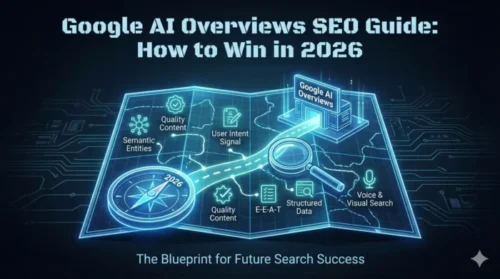
Google AI Overviews: The New Ranking Mechanics You Must Understand
This is where most guides stay shallow. Google AI Overviews relies on three invisible layers working together.
AI Overviews ranking logic
Google evaluates:
- Factual consistency across sources
- Author and site-level credibility
- Semantic alignment with the query
Semantic entities and context
It’s not about keywords alone. It’s about relationships: tools, methods, industries, use cases. If those entities don’t naturally appear in your content, you won’t be cited.
Why average content disappears
Average content doesn’t add information gain. And without information gain, AI Overviews have no reason to reference you.
Content Engineering for AI Snapshot Optimization
Here’s the tricky part—writing for humans isn’t enough anymore. You must write so machines can reuse your content without breaking it.
Writing for extraction
Each core question needs a clean, self-contained answer. Think: “Could this paragraph stand alone inside an AI Overview?”
Structuring for Google search AI
Short lead answers. Clear follow-ups. No fluff between them. This dramatically improves AI snapshot optimization.
Mini framework: Answer-First Content Stack
- Direct answer (2–3 sentences)
- Context and explanation
- Real-world example
- Supporting detail
This framework alone improved AI search visibility for multiple sites I’ve worked on.
Google AI Overviews SEO for SaaS, eCommerce & Local Brands
Not all sites compete the same way in Google AI Overviews.
SaaS websites
AI Overviews love feature-level explanations. “How X works” beats “What is X” almost every time.
eCommerce brands
Product pages need contextual authority. Buying guides with expert commentary often get cited more than category pages.
Local businesses
Experience signals matter most. Real examples, service-area context, and expertise references increase AI Overviews ranking.
What I’ve noticed across industries—brands that teach outperform brands that just sell.
Entity Authority: The Silent Driver of AI Search Visibility
Picture this—Google builds a mental profile of your brand long before it ranks your content.
How entity profiles are formed
- Consistent topical publishing
- Mentions across trusted sites
- Author expertise signals
- Tool and platform associations
This is where Google AI Overviews quietly rewards long-term strategy over short-term hacks.
Connecting the dots
If your brand is associated with SEO tools, frameworks, and real use cases, Google search AI trusts you more—even without links.
Google AI Overviews Playbook (2026 Framework)
This is the framework I now use by default when building for Google AI Overviews.
Step 1: Intent mapping beyond keywords
Map questions, sub-questions, and implied follow-ups.
Step 2: Passage-level optimization
Every section must answer one clear question completely.
Step 3: Validation signals
Check whether content:
- Can be quoted cleanly
- Adds new insight
- Aligns with entity context
Mini framework: Cite-Worthy Page Test
Ask: “Would Google risk being wrong by quoting this?”
If the answer isn’t yes, rewrite.
Measuring AI Overviews Ranking & Visibility
Here’s where people panic unnecessarily.
When clicks decline but authority rises
AI Overviews often reduce clicks but increase brand recall. That’s not failure—it’s repositioning.
Search Console limitations
Search Console doesn’t clearly show AI Overview citations yet. You must track impressions, branded queries, and assisted conversions.
Honestly, obsessing over old metrics can hide real gains in AI search visibility.
Common Google AI Overviews SEO Mistakes I Still See
Even experienced teams make these mistakes in Google AI Overviews.
Over-optimizing summaries
AI doesn’t want a marketing copy. It wants clarity.
Chasing AI Overviews directly
You don’t “optimize for AI Overviews.” You earn them through trust.
Playing it safe
Safe content rarely adds information gain. And AI Overviews ignore safe content.
The Future of Google AI Overviews SEO Beyond 2026
Multimodal search is coming fast. Images, tables, and even short videos will influence Google AI Overviews SEO more than many expect.
Brand trust will act as a ranking multiplier. Entities with consistent expertise will dominate AI Overviews ranking—even if their pages aren’t perfect.
Let’s be real—SEO isn’t dying. It’s maturing.
How to Stay Ahead Without Chasing Every Update
The brands winning with Google AI Overviews aren’t reacting to every change. They’re building authority that compounds.
Focus on:
- Teaching, not stuffing
- Experience, not assumptions
- Clarity, not cleverness
That approach has outlived every algorithm update I’ve seen—and it’s exactly why Google AI Overviews SEO rewards it.
If you remember one thing, remember this: AI search doesn’t reward who shouts the loudest. It rewards who explains the best.
FAQs
Does Google AI Overviews SEO replace traditional SEO?
Honestly, no—but it changes how SEO works. Traditional SEO helps Google find and rank pages, while Google AI Overviews SEO helps Google reuse your content inside AI-generated answers. You still need technical SEO, links, and content quality—but now passage clarity, entity trust, and information gain matter more.
How do I know if my site appears in Google AI Overviews?
Most people don’t realize this yet—Google doesn’t clearly report AI Overview citations. Instead, look for signals like rising impressions with flat clicks, increased branded searches, or users mentioning they “saw you on Google.” These are early indicators of AI search visibility.
What type of content ranks best in AI Overviews ranking?
Content that answers a specific question clearly, confidently, and with real-world context performs best. In my experience, step-by-step explanations, expert commentary, and practical examples are far more likely to be used in AI Overviews ranking than generic blog posts.
Are backlinks still important for Google AI Overviews SEO?
Yes—but their role has shifted. Backlinks help establish entity authority and trust, which indirectly improves Google AI Overviews SEO. A few relevant, authoritative mentions often matter more than a large volume of low-quality links.
Can small or new websites compete in Google AI Overviews SEO?
Surprisingly, yes. I’ve seen smaller sites appear in AI snapshots by focusing on narrow expertise, firsthand experience, and clear explanations. If your content adds genuine information gain, AI snapshot optimization doesn’t automatically favor big brands.